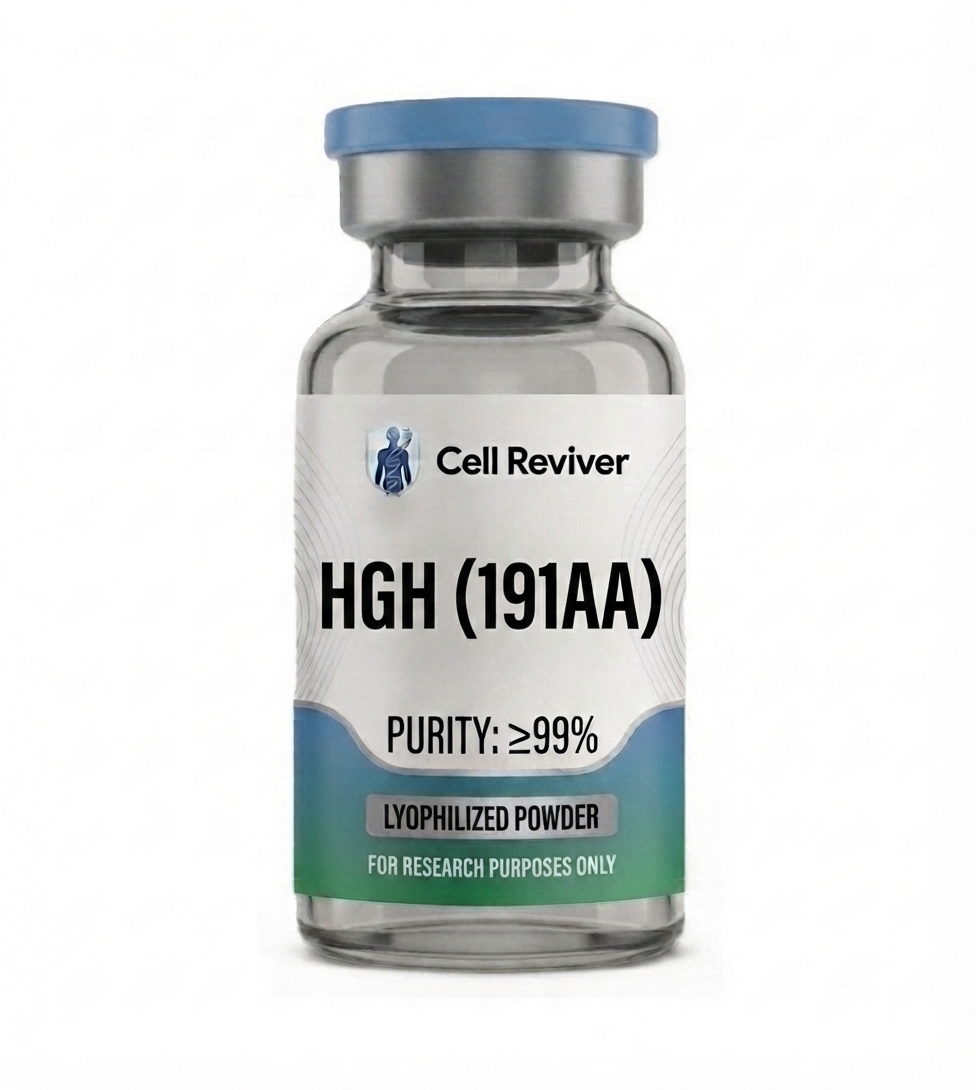
HGH 191AA Research Information
Recombinant Human Growth Hormone
Somatropin for Endocrine & Metabolic Research
Important: This information is for educational and research purposes only. Always consult with a qualified healthcare professional before use.
Contents
What is HGH 191AA?
Human Growth Hormone 191AA (somatropin) is a 191-amino acid, single-chain polypeptide hormone synthesized, stored, and secreted by somatotropic cells within the lateral wings of the anterior pituitary gland. It is identical to endogenous human growth hormone and is produced using recombinant DNA technology.
HGH 191AA is a peptide hormone that stimulates growth, cell reproduction, and regeneration in humans and other animals. It is classified as a polypeptide consisting of 191 amino acids with a molecular weight of approximately 22 kDa.
Mechanism of Action
HGH 191AA functions through multiple signaling pathways to support research models:
GHR Binding
Possesses two receptor-binding sites, binding two GHR molecules
JAK-STAT Pathway
Activates Jak2 and STAT5a/b, translocating to nucleus for gene transcription
IGF-1 Production
Stimulates IGF-1 production through JAK-STAT signaling pathway
Additional pathways include MAPK/ERK pathway activation and PI3K pathway regulation of lipogenic effects. GHR exists as a preformed dimer on the cell membrane.
Research Applications
Growth Hormone Deficiency
Growth disorders, pediatric endocrinology, adult GHD research
Metabolic Research
Carbohydrate, protein, and lipid metabolism studies
Reproductive Research
Infertility, IVF outcomes, follicle development studies
Recovery & Regeneration
Tissue repair, muscle recovery, injury healing protocols
Clinical Studies
Key Research Findings:
- HGH 191AA demonstrates high affinity binding to GHR
- Growth hormone is essential for postnatal growth and metabolic regulation
- Signals through JAK/STAT, MAPK/ERK, and PI3K pathways
- FDA approved since 1976 for growth hormone deficiency
Dosing Guide
Reconstitute 10iu vial with 3mL bacteriostatic water = 3.33 IU/mL concentration. Units assume a standard U-100 insulin syringe (100 units = 1 mL).
Step 1: Select Vial Size
Step 2: Select Dose
Research protocols typically range from 1-4 IU daily. Begin at 1-2 IU and titrate up.
Vial Size
10iu Vial
Selected Dose
1 IU
Doses per Vial
10 doses
Units on Syringe
30 units
Volume
0.30 mL
Protocol
Starting
Recommended Schedule
Once daily - Subcutaneous Injection
Do not change your dose unless advised by a qualified professional.
Reconstitution Instructions
Add 3mL of bacteriostatic water to your freeze-dried vial and mix gently. After reconstitution, use the table below to draw your dose:
Vial Size
10iu vial with 3mL bac water (3.33 IU/mL)
| Dose | Units on Syringe | Volume (mL) | Protocol |
|---|
Always use a new sterile needle and syringe for each injection.
Safety & Precautions
Do not use if you:
- Are allergic to HGH or any components
- Are pregnant or breastfeeding
- Have active cancer
Warning: If you experience severe allergic reactions, difficulty breathing, or signs of anaphylaxis, seek immediate medical help.
References
- Growth Hormone Deficiency Affecting Clinical Prognosis in IVF. Front Endocrinol. 2019
- Growth Hormone and its Receptor: A Molecular Insight. Saudi J Health Sci. 2012
This information is for educational and research purposes only. Always consult with a qualified healthcare professional.
Last updated: August 2026